
Vastu for Commercial Property: Office, Shop and Business Premises Guide
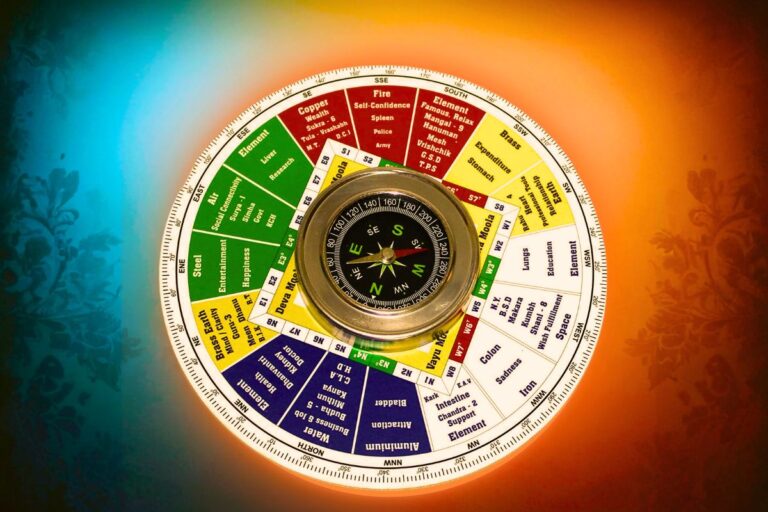
Running a business is about much more than choosing the right location, designing an attractive workspace, and managing finances. The environment in which a business operates can also influence how people experience the space. This is where Vastu for commercial property becomes relevant. Vastu Shastra is a traditional Indian architectural system that focuses on the relationship between a built environment, its directions, layout, and the natural elements. Many business owners consider Vastu while selecting an office, shop, showroom, clinic, studio, or other commercial property. If you are planning to purchase, rent, renovate, or construct a commercial property, understanding basic Vastu principles can help you make more informed decisions about the layout and use of different spaces. A professional commercial Vastu consultant can also assess the property according to its direction, entrance, floor plan, business activity, and existing structural conditions. In this guide, we will explore practical Vastu for office, Vastu for shops, and other important commercial property considerations in a simple and human-friendly way.
What Is Vastu for Commercial Property?
Commercial Vastu is the application of Vastu Shastra principles to spaces used for business and professional activities. Unlike residential Vastu, where the focus is largely on comfort, family life, rest, and relationships, commercial Vastu also considers productivity, customer movement, financial activities, employee efficiency, decision-making, and business operations. The purpose is not simply to place everything in a particular direction. A commercial property has to work practically as well. Customers should be able to enter comfortably, employees should have functional workstations, storage should be convenient, and the overall design should suit the nature of the business. A commercial Vastu consultant generally studies the property’s orientation, entrance, internal layout, placement of departments, owner or manager’s cabin, cash counter, reception, storage areas, toilets, staircase, electrical equipment, and other important spaces.
Why Is Commercial Vastu Important for a Business?
Many entrepreneurs believe that the physical environment of a workplace can affect the way people feel and work within it. A well-organized commercial space can create a sense of balance, cleanliness, direction, and professionalism. From a Vastu perspective, different directions are traditionally associated with different energies and elements. Businesses may therefore consider these principles when designing or modifying their premises. However, Vastu should be viewed as a complementary traditional planning approach rather than a substitute for sound business decisions. Location, market demand, financial planning, customer service, product quality, employee management, and business strategy remain essential for success.
Vastu for Commercial Property Entrance
- The main entrance is one of the most important considerations in commercial Vastu. It is traditionally regarded as the point through which people, movement, and energy enter the premises.
- The exact suitability of an entrance depends on the property’s orientation, dimensions, surrounding structures, and business type. Therefore, simply choosing a direction because it is considered generally auspicious may not be sufficient.
- The entrance should ideally be easy to identify, accessible, well-maintained, and free from unnecessary clutter. A dark, blocked, damaged, or poorly maintained entrance can make even a commercially attractive property feel unwelcoming.
- From a practical perspective, the entrance should also allow smooth movement of customers, employees, and deliveries.
Which Direction Is Best for a Commercial Property?
- There is no single direction that is universally perfect for every business. The suitability of a commercial property depends on factors such as the business activity, plot orientation, entrance placement, internal arrangement, surrounding environment, and the position of important rooms.
- Traditionally, east and north directions are often considered significant in Vastu planning, while the northeast is treated with particular importance. However, a commercial Vastu consultant should evaluate the complete property rather than judging it solely by its facing direction.
- A south- or west-facing commercial property is not automatically unsuitable. Proper planning of the entrance, work areas, owner cabin, storage, reception, and other spaces may be considered based on the individual property.
Vastu for Office
- An office is a space where employees spend significant amounts of time performing focused and collaborative work. Vastu for office therefore considers the placement of workstations, cabins, meeting rooms, reception areas, accounts departments, and other functional spaces.
- The office should feel organized and comfortable. Workstations should have sufficient space, lighting should be appropriate, and unnecessary obstacles should be avoided.
- Traditionally, the southwest area is often associated with stability and authority, making it a commonly considered location for the business owner or senior management cabin.
Vastu for Owner and Manager Cabin
- The owner’s or senior manager’s cabin is an important part of commercial Vastu planning because it represents authority and decision-making within the organization.
- Traditionally, the southwest zone is often preferred for the head of the business. The person sitting at the desk may also be advised to face a suitable direction according to the property’s overall Vastu assessment.
- The cabin should be spacious, clean, and professionally organized. The desk should not unnecessarily obstruct the entrance, and important documents should be stored systematically.
- Rather than blindly following a fixed direction, the complete floor plan should be evaluated by a commercial Vastu consultant.
Vastu for Employee Workstations
- Employee seating is another consideration in Vastu for office. A well-planned workspace should provide employees with sufficient room, natural or suitable artificial lighting, ventilation, and comfortable movement.
- Traditional Vastu recommendations may vary according to the employee’s role and the direction of the workspace. In practice, the most important goal should be to create an environment where employees can concentrate without feeling cramped or uncomfortable.
- Avoid placing workstations in areas that interfere with doors, corridors, emergency exits, or essential equipment.
Vastu for Reception Area
- The reception is often the first area customers see when entering an office or commercial establishment. It therefore needs to make a positive impression.
- According to traditional Vastu principles, the reception may be planned with consideration of the property’s direction and entrance. The reception desk should not create an obstruction near the entrance.
- Use a clean, professional design with adequate lighting and clear signage. A clutter-free reception can improve the visitor experience while also complementing the principles of commercial Vastu.
Vastu for Shop and Showroom
- Vastu for shops focuses on several elements, including the entrance, customer movement, product display, cash counter, owner seating, storage, and overall layout.
- A shop should have a clear pathway for customers. Frequently purchased or visually important products can be displayed in areas where customers can easily notice them.
- The cash counter is traditionally considered an important element in a commercial space. Its position should be evaluated according to the shop’s orientation and complete layout rather than following a generic rule.
- The owner or salesperson should also have a comfortable position from which they can monitor customer movement and business activity.
Vastu for Cash Counter
- The cash counter has traditionally been associated with financial stability and the flow of money in a business.
- Vastu recommendations for cash counters vary according to the orientation and floor plan of the property. Therefore, there is no single position that should be applied to every shop.
- Apart from Vastu considerations, the cash counter should be positioned where it can be monitored easily, provide adequate privacy, and allow customers to complete transactions comfortably.
- Digital payment equipment, billing systems, computers, and important financial records should also be arranged in an organized manner.
Vastu for Business Office Furniture
- Furniture placement can influence how effectively a commercial property functions. Desks, chairs, cabinets, shelves, and meeting tables should be arranged without creating unnecessary congestion.
- Heavy furniture is traditionally associated with certain zones, particularly the southwest area. Lighter and more open areas may be maintained in other zones depending on the property’s layout.
- From a practical standpoint, avoid blocking windows, ventilation points, electrical panels, fire exits, or walkways simply to follow a Vastu recommendation.
Vastu for Conference and Meeting Rooms
- Meetings are an important part of many businesses. A conference room should be spacious enough for participants to communicate comfortably.
- The placement of a meeting room can be evaluated based on the nature of the business and the property’s overall orientation. Lighting, acoustics, ventilation, seating arrangement, and technology should also be considered.
- A Vastu-friendly meeting space should still remain functional. There is little benefit in following a theoretical placement if the room becomes uncomfortable or difficult to use.
Vastu for Accounts and Finance Department
- For businesses handling significant financial operations, the accounts department is an important area to consider.
- Traditional commercial Vastu may associate particular directions with financial activities. However, the ideal location depends on the complete floor plan.
- The accounts area should also provide adequate privacy and security. Financial documents should be organized, sensitive information should be protected, and the workspace should have appropriate lighting and ventilation.
Vastu for Storage and Inventory
- Storage requirements differ considerably between businesses. A retail store, warehouse, restaurant, manufacturing unit, and office will all have different inventory needs.
- Heavy storage is traditionally considered more suitable for certain zones, particularly the southwest or west, depending on the property’s layout.
- Shelves should be stable and should not create hazards. Frequently accessed products should be easy to retrieve, while rarely used inventory can be stored in less accessible areas.
- Good inventory management should always take priority over a rigid Vastu arrangement.
Vastu for Staircase in Commercial Property
- In a multi-storey commercial property, staircase placement can become an important Vastu consideration.
- Traditional Vastu evaluates the location and movement of staircases according to the building’s orientation. The exact recommendation can vary depending on the property.
- Safety should always come first. Staircases must comply with applicable building and fire-safety requirements, have adequate lighting, and remain free of unnecessary objects.
Vastu for Toilet in Commercial Property
- Commercial buildings naturally require toilets and washrooms, but their location is sometimes a concern during Vastu planning.
- Traditional Vastu provides recommendations regarding suitable zones for toilets. However, existing buildings may not always allow structural changes.
- If you are buying or renting a commercial property, a commercial Vastu consultant can assess whether practical corrections or design adjustments are possible without major reconstruction.
Vastu for Electrical Equipment
- Electrical equipment, servers, machinery, computers, air conditioners, generators, and other heat-producing devices can be significant in commercial premises.
- Traditional Vastu associates fire-related activities with particular zones, but modern commercial buildings contain electrical systems throughout the property.
- Electrical installations should always be designed and maintained according to professional electrical and safety standards. Vastu considerations should complement—not replace—technical requirements.
Vastu for Different Types of Businesses
- Not every business should follow exactly the same commercial Vastu plan. The nature of the business can influence how the space is organized.
- For example, a retail store needs strong customer circulation and product visibility. An IT company may require workstation clusters, meeting rooms, server infrastructure, and collaborative spaces. A consultancy may need private cabins and discussion areas.
- Restaurants, clinics, educational institutes, manufacturing units, warehouses, salons, and showrooms also have completely different functional requirements.
- This is why personalized commercial Vastu consultation can be more useful than applying generic online Vastu tips.
Vastu for Commercial Property Before Buying
- If you are planning to purchase a commercial property, Vastu can be considered before finalizing the property rather than after construction or renovation.
- Start by checking the property’s facing direction, entrance location, shape, floor plan, surrounding structures, staircase, toilets, major rooms, and other permanent features.
- A professional assessment may identify potential concerns before you make a significant investment.
- At the same time, consider practical factors such as location, parking, accessibility, visibility, competition, customer demographics, rent or purchase costs, legal documentation, and future development.
Vastu for Rented Commercial Property
- Business owners often assume that Vastu matters only when purchasing or constructing a building. However, tenants may also consider it when selecting an office or shop.
- When renting, major structural changes may not be possible. In such cases, the focus can be on non-structural aspects such as furniture placement, workstation arrangement, storage organization, entrance cleanliness, lighting, and workspace usage.
- A commercial Vastu consultant can help identify practical modifications that do not require extensive construction.
Can Vastu Improve Business Success?
- Vastu is traditionally believed to create harmony between people and their built environment. Many business owners use it as part of their planning process.
- However, it is important to maintain realistic expectations. Vastu alone cannot guarantee increased sales, profits, customers, or business growth.
- Successful businesses depend on many factors, including market research, product quality, pricing, customer relationships, financial management, marketing, employee performance, and adaptability.
- The best approach is to combine traditional Vastu principles with practical business planning.
Common Commercial Vastu Mistakes to Avoid
- One common mistake is focusing only on the entrance while ignoring the rest of the property. Commercial Vastu involves multiple aspects of a building, and the complete layout matters.
- Another mistake is applying the same Vastu formula to every business. A restaurant, corporate office, retail shop, and warehouse have different requirements.
- Business owners should also avoid making expensive structural changes based solely on generic advice from the internet. Every property has unique characteristics.
- Finally, do not allow Vastu changes to compromise fire safety, electrical safety, accessibility, ventilation, building regulations, or employee comfort.
When Should You Consult a Commercial Vastu Consultant?
The ideal time to consult a commercial Vastu consultant is before purchasing, renting, constructing, or significantly renovating a commercial property. Early consultation can provide more options because structural changes are easier to consider before construction begins. However, consultation can also be useful for an existing office or shop. A professional can examine the current floor plan and suggest practical adjustments where possible. At The Enlighten Path, the objective of Vastu consultation can be approached with an emphasis on understanding the individual property rather than applying a one-size-fits-all formula.
How a Commercial Vastu Consultation Works
A commercial Vastu consultation generally begins with understanding the property and the client’s requirements. The consultant may review the floor plan, entrance direction, property orientation, room placements, business activity, and other relevant details. The assessment may identify areas that could potentially be improved and suggest suitable changes. Depending on the property, recommendations can range from simple furniture rearrangement to broader planning considerations. Existing commercial properties may require a different approach from properties that are still under construction. The goal should be to create a commercially functional space while incorporating appropriate traditional Vastu principles.
Practical Tips for a Vastu-Friendly Commercial Space
- Keep the main entrance clean, visible, and free from unnecessary obstacles. Maintain a clutter-free workspace because disorder can make a commercial environment feel stressful and inefficient.
- Use adequate lighting and ventilation throughout the premises. Keep important business areas organized and ensure that furniture does not obstruct movement.
- Avoid unnecessary accumulation of broken equipment, damaged furniture, unused files, or obsolete inventory. Keep the reception area welcoming and professional.
- Most importantly, do not make expensive structural modifications without first understanding the entire property.
Why Choose The Enlighten Path for Commercial Vastu Consultation?
Choosing a Vastu consultant is a personal decision, particularly when the property represents a significant business investment. A useful consultation should consider the actual property rather than simply providing generic lists of good and bad directions. The Enlighten Path can help individuals explore Vastu-based guidance for commercial spaces while considering the property’s layout and the specific requirements of the business. Whether you are planning a new office, opening a retail shop, setting up a showroom, moving into a new workspace, or evaluating an existing commercial property, professional guidance can help you understand the space from a Vastu perspective. For more information about Vastu services and consultations, visit The Enlighten Path.
Frequently Asked Questions About Commercial Vastu
Which direction is best for a commercial property?
There is no universally perfect direction for every commercial property. East and north are traditionally considered favorable in many Vastu systems, but the complete orientation, entrance, floor plan, business activity, and surrounding environment should be evaluated before making a decision.
Is a south-facing commercial property bad according to Vastu?
No. A south-facing commercial property is not automatically bad. Its suitability depends on factors such as the exact entrance placement, layout, proportions, surrounding environment, and use of different zones.
Which direction is good for an office cabin?
The southwest area is traditionally considered suitable for the business owner or senior authority in many Vastu approaches. However, the exact placement should be evaluated according to the complete office floor plan.
Is Vastu important for a rented shop?
Many business owners consider Vastu when selecting a rented shop. Even when structural changes are not possible, furniture, seating, storage, entrance organization, and other non-structural elements may be adjusted.
Can Vastu help increase business growth?
Vastu is traditionally believed to support harmony and balance in a built environment, but it cannot guarantee business growth. Sales, marketing, product quality, customer service, financial management, and business strategy remain critical factors.
Should I consult a Vastu expert before buying commercial property?
If Vastu is important to you, consulting an expert before purchasing can be useful. Early assessment allows you to understand potential Vastu considerations before making a major investment.
Can an existing commercial property be corrected according to Vastu?
In many cases, consultants may suggest non-structural changes such as rearranging furniture, changing the use of particular areas, improving organization, or making other practical adjustments. Structural changes should be considered carefully and professionally.
What does a commercial Vastu consultant check?
A consultant may examine the property’s orientation, entrance, floor plan, rooms, owner cabin, employee seating, cash counter, storage, staircase, toilets, electrical areas, and other relevant features. The assessment may also consider the nature of the business.
Conclusion
Vastu for commercial property is best understood as a traditional approach to creating a balanced and thoughtfully organized business environment. Whether you own an office, shop, showroom, studio, clinic, warehouse, or other commercial space, the layout can be evaluated from both Vastu and practical perspectives. Instead of relying on generic rules, consider the individual characteristics of your property. A professional commercial Vastu consultant can assess the complete layout and help identify practical opportunities for improvement. Most importantly, Vastu should work alongside good architecture, safety, functionality, and business planning. When these elements are considered together, you can create a commercial environment that feels organized, professional, and comfortable for both customers and employees. If you are planning to buy, rent, construct, renovate, or evaluate a commercial property, The Enlighten Path can be explored for personalized Vastu guidance tailored to your requirements.