How Tarot Can Support Personal Growth and Self-Discovery
Personal growth begins when we take the time to understand ourselves. Our emotions, thoughts, experiences, relationships, and everyday decisions all influence who we become. Yet, in the middle of busy schedules, responsibilities, and expectations, we often forget to pause and ask ourselves an important question: Am I truly understanding myself and what I need from life? This is where tarot for personal growth can offer a meaningful opportunity for reflection. Tarot cards are often associated with predicting the future, but they can also be used as a tool to explore emotions, recognise personal patterns, understand challenges, and discover new perspectives. Sometimes, we already know what is bothering us but struggle to put it into words. At other times, we feel confused about a relationship, career decision, personal goal, or emotional experience. A thoughtful tarot reading can create space to explore these feelings and consider different ways forward.
At The Enlighten Path, tarot is approached as a way to encourage self-awareness, inner clarity, and spiritual exploration. Rather than treating a card as a fixed answer to life’s questions, you can use its symbolism as an invitation to reflect, reconnect with your intuition, and make more conscious choices. Whether you are beginning your spiritual journey or already practising mindfulness, tarot can become a gentle part of your personal development routine.
What Is Tarot for Personal Growth?
Tarot for personal growth is the practice of using tarot cards to explore your inner world, understand your experiences, and reflect on the choices you make. Instead of focusing only on what might happen in the future, a personal growth reading focuses on what you are experiencing in the present and what you can learn from it. Each tarot card contains symbols, images, and themes that can inspire different interpretations. Depending on the question you ask and your current circumstances, a card may encourage you to think about confidence, patience, emotional balance, change, relationships, or personal responsibility. For example, if you draw a card associated with new beginnings, you might reflect on an opportunity you have been avoiding. If a card represents patience, you may consider whether you are putting unnecessary pressure on yourself to achieve everything immediately. The value lies in the reflection that follows the reading. Tarot does not scientifically establish what will happen in your life, nor does it guarantee particular outcomes. Instead, it can offer a structured way to consider your thoughts, feelings, and possibilities. When practised thoughtfully, personal development tarot can help you move from repeatedly asking, “Why is this happening to me?” towards more constructive questions, such as, “What can I learn from this experience?” and “What can I do differently?”
How Tarot Supports Self-Discovery
Self-discovery is an ongoing process. It involves recognising your strengths, understanding your emotions, identifying your values, and learning how your past experiences influence your present behaviour. Self-discovery tarot offers a creative way to begin this exploration. The cards provide prompts that encourage you to look beyond your immediate reactions and consider what may be happening beneath the surface.
Understanding Your Emotions
- Emotions can sometimes feel difficult to understand. You may feel frustrated without knowing why, anxious about a decision, or disappointed by an experience you thought you had accepted.
- A reflective tarot reading can help you slow down and explore these feelings without immediately judging yourself.
- For example, drawing a card associated with emotional balance might encourage you to ask whether you have been ignoring your own needs to keep other people happy. A card associated with change might prompt you to consider whether you are holding on to a situation that no longer feels right.
- The card does not diagnose your emotional state. Instead, it gives you a starting point for honest self-reflection.
Recognising Your Strengths and Weaknesses
- Personal growth is not only about identifying problems. It is equally important to recognise the qualities that help you move forward.
- Tarot cards associated with courage, creativity, independence, or resilience can encourage you to acknowledge strengths you may have overlooked.
- Suppose you have been facing a difficult period at work. A reading that brings attention to resilience may remind you of challenges you have already overcome. You might begin to recognise that you have more patience, adaptability, and problem-solving ability than you give yourself credit for.
- At the same time, reflective questions can help you identify habits that need attention, such as avoiding difficult conversations, doubting your abilities, or setting unrealistic expectations.
- Self-awareness grows when you learn to acknowledge both your strengths and the areas where you want to improve.
Discovering Your Personal Values
Many people make decisions based on family expectations, social pressure, or the desire to gain approval. Over time, these influences can make it difficult to distinguish between what others want and what genuinely matters to you. Tarot can provide an opportunity to explore your personal values. You might ask yourself:
What makes me feel fulfilled?
Which beliefs guide my decisions?
Am I choosing this path because I want it or because others expect it?
What does a meaningful life look like to me?
These questions can help you recognise whether your daily choices reflect your priorities. Understanding your values does not mean you must change your life overnight. Sometimes, personal growth begins with small decisions that bring your actions closer to what you genuinely believe in.
Tarot Self-Reflection: Looking Beyond the Surface
Tarot self reflection encourages you to pause before reacting to a situation. Instead of immediately looking for answers outside yourself, you take time to examine your thoughts, assumptions, and feelings. This practice can be particularly useful when you feel emotionally overwhelmed or stuck in a repetitive pattern.
Asking Better Questions During a Tarot Reading
The questions you ask can shape the quality of your reflection. Questions that encourage awareness and personal responsibility are often more useful than questions that demand certainty about the future. For example, instead of asking, “Will everything work out for me?” consider asking, “What can I do to handle my current situation more thoughtfully?” Instead of asking, “Will this person change?” ask, “What do I need from this relationship, and am I communicating those needs clearly?” Other helpful questions include:
What am I learning about myself right now?
Which habit may be holding me back?
What fear is influencing my decisions?
Where do I need to establish healthier boundaries?
What small step can help me move forward?
These questions keep the focus on your awareness, choices, and actions rather than making you dependent on predictions.
Using Tarot to Identify Repeating Patterns
Have you ever noticed yourself experiencing the same difficulties in different situations? Perhaps you repeatedly struggle to say no, become anxious when someone disagrees with you, or abandon a personal goal when progress feels slow. Recognising these patterns is an important part of self-discovery. A tarot journal can help you explore recurring themes. Record the card you draw, the question you asked, your immediate thoughts, and any connections you notice with your everyday experiences. Over several weeks, you may discover that certain topics keep appearing in your reflections. For example, you might repeatedly think about boundaries, self-confidence, or the fear of failure. These observations are not proof that the cards reveal hidden truths. They are opportunities to examine patterns you may want to understand more deeply.
The Role of Tarot in Emotional Growth
Emotional growth involves learning to recognise feelings, respond thoughtfully, and develop healthier ways of dealing with difficult experiences. Tarot can support this process by creating a quiet moment for reflection. Rather than distracting yourself from uncomfortable feelings, you can use a reading to explore what those feelings might be telling you about your needs, expectations, or circumstances.
Creating Space for Difficult Feelings
Many people find it easier to stay busy than to sit with uncomfortable emotions. However, ignored feelings can sometimes influence decisions and relationships without being fully understood. A reflective tarot session can encourage you to pause and ask what you are experiencing. If a card brings up feelings of sadness, fear, or uncertainty, give yourself permission to notice those emotions without forcing an immediate solution. You could write about what happened, what you needed at that moment, and what might help you feel supported. This approach encourages emotional awareness without treating every feeling as a problem that must be fixed. Tarot is not a replacement for mental health treatment or professional counselling. If emotional distress is persistent or affecting your everyday life, support from a qualified mental health professional can be important.
Learning to Let Go of What No Longer Helps You
Letting go is not always easy. It may involve releasing unrealistic expectations, reconsidering an old belief, accepting a change, or recognising that a particular habit is no longer serving you. Cards traditionally associated with endings, transitions, or transformation can provide a useful starting point for exploring these experiences. For instance, you might reflect on whether you are holding on to an old disappointment because you fear experiencing something similar again. You could also consider whether a past mistake has become part of the way you define yourself. Personal growth does not require forgetting the past. It means learning from it without allowing every past experience to determine your future choices. Through thoughtful tarot self reflection, you can begin to recognise what you wish to carry forward and what you are ready to approach differently.
Using Tarot for Confidence and Personal Empowerment
Self-confidence develops through experience, self-acceptance, and the willingness to take action even when the outcome is uncertain. Sometimes, a lack of confidence comes from comparing yourself with others or expecting yourself to be perfect. At other times, it grows from repeated criticism, past disappointments, or the fear of making mistakes. Personal development tarot can help you explore these concerns by directing attention towards your abilities, choices, and opportunities for growth.
Building Trust in Your Own Decisions
- It is natural to seek advice when facing an important decision. However, constantly looking for reassurance can make it difficult to trust your own judgement.
- A reflective tarot reading can help you explore the different factors influencing a choice.
- Suppose you are considering a career change. You could use a three-card spread to reflect on your current situation, the concern that is holding you back, and a practical step you can take next.
- After the reading, consider the real-world factors involved, including your skills, finances, responsibilities, and long-term goals.
- The cards should not make the decision for you. Instead, they can help you organise your thoughts and identify questions worth exploring further.
Turning Self-Awareness into Action
- Insight becomes more valuable when it leads to meaningful action.
- If a reading encourages you to think about confidence, choose one small action that helps you practise it. You might speak up during a meeting, apply for a role that interests you, or complete a task you have been postponing.
- If the reflection highlights the need for balance, you could set aside time for rest or establish a healthier boundary around your working hours.
- These small steps build confidence gradually. They also remind you that personal growth is not something that happens through reflection alone; it develops through the choices you make afterwards.
Tarot for Relationships and Healthy Boundaries
- Relationships can reveal a great deal about our emotional needs, communication habits, and expectations. They can also bring up insecurities and patterns that are difficult to recognise on our own.
- Tarot for personal growth can provide a reflective space to consider how you participate in your relationships and what you need to feel respected and understood.
Understanding Your Relationship Patterns
- If you repeatedly find yourself in similar relationship difficulties, it may help to reflect on the behaviours and expectations involved.
- You might ask yourself whether you communicate your needs clearly, avoid disagreements to maintain peace, or expect others to understand feelings you have not expressed.
- Tarot cards associated with balance, connection, or independence can encourage you to examine these questions from a different perspective.
- The purpose is not to blame yourself or another person. It is to understand your own responses and recognise where healthier communication may be possible.
Learning to Establish Boundaries
- Healthy boundaries allow you to respect your own needs while recognising the needs of others.
- If you frequently agree to things you do not want to do, you may benefit from reflecting on why saying no feels uncomfortable.
- A tarot journaling prompt could be, “Where do I need to communicate my boundaries more clearly?”
- Your answer might reveal that you fear disappointing people or worry that disagreement will damage a relationship.
- Recognising these concerns can help you practise expressing yourself more honestly. Remember that tarot cannot establish another person’s private thoughts or intentions. Direct communication and attention to real behaviour are more reliable ways to understand a relationship.
Tarot for Career Clarity and Life Purpose
Career choices, professional responsibilities, and questions about life direction can create uncertainty. You may feel dissatisfied with your current role, want to explore a new opportunity, or wonder whether your everyday work aligns with your personal values. Tarot can be used as a reflective tool to explore these questions without treating a reading as a guarantee of professional success.
Exploring Your Career Strengths
- A career-focused tarot reading might encourage you to think about the skills you enjoy using, the tasks that give you energy, and the working environment in which you feel most comfortable.
- For example, if a card inspires you to reflect on creativity, consider whether your current role allows you to express new ideas. If it brings up themes of learning, ask whether you have opportunities to develop your skills.
- Write down the insights that feel relevant and compare them with your actual work experience.
- You can then use this reflection to identify practical next steps, such as learning a new skill, updating your CV, speaking with a mentor, or researching a different career path.
Finding Meaning Beyond Career Success
- Life purpose is not always connected to one profession or a single major achievement. It can also be found in relationships, creativity, service, learning, and the everyday activities that make life meaningful.
- Personal development tarot can encourage you to consider what a fulfilling life means to you personally.
- Instead of asking whether you are following the perfect path, ask whether your current choices reflect your values and whether there is something you would like to change.
- You do not need to have every answer immediately. Sometimes, greater clarity develops through small experiments, new experiences, and a willingness to learn about yourself.
How to Start a Tarot Practice for Personal Growth
You do not need extensive knowledge of tarot to begin using it for self-reflection. A simple, consistent routine can be enough to help you explore your thoughts and develop a greater understanding of your experiences.
Step 1: Create a Quiet Space
Choose a comfortable place where you can spend a few uninterrupted minutes. Put away distractions, take a few slow breaths, and decide what you would like to reflect on. You may choose to include meditation, calming music, or another personal ritual, but these are optional.
Step 2: Choose a Clear Question
Focus on one area of your life rather than trying to answer every question at once. For example, ask, “What should I reflect on to improve my work-life balance?” or “What can I learn from a recent challenge?” Open-ended questions usually encourage deeper reflection than questions that demand a simple yes-or-no answer.
Step 3: Draw One or Three Cards
If you are a beginner, start with a single card. Look at its imagery and notice which details attract your attention. Alternatively, try a simple three-card spread:
Card one: What is happening in my current situation?
Card two: What perspective or challenge should I explore?
Card three: What practical step could I consider?
Interpret the cards thoughtfully and allow yourself to consider more than one possible meaning.
Step 4: Write Down Your Reflections
Keep a notebook for your tarot practice. Record your question, the cards you drew, your interpretation, and any emotions or thoughts that emerged. You can also write down one practical action you would like to take. Reviewing earlier entries may help you notice changes in your thinking, recurring concerns, and progress towards personal goals.
Step 5: Review Your Progress
At the end of each week, spend a few minutes looking back at your journal. Ask yourself what you learned, which actions helped, and what you would like to approach differently next week. There is no need to perform readings every day or search for a message in every card. A healthy practice should support your independence and self-awareness rather than create pressure or anxiety.
Common Tarot Cards Associated with Personal Growth
Different tarot decks interpret their cards in different ways, but certain traditional themes can provide useful prompts for reflection.
The Fool: Embracing New Beginnings
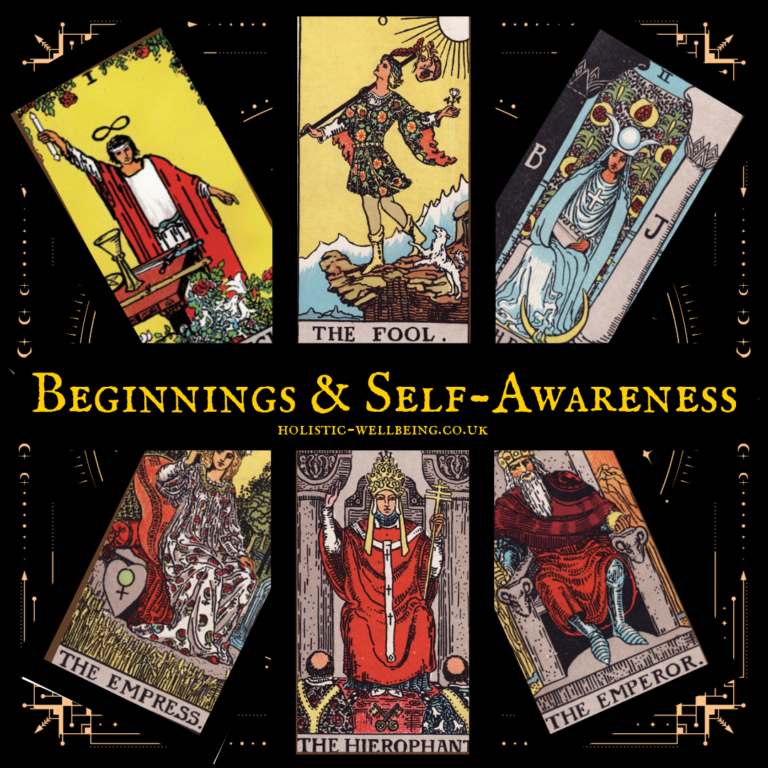
The Fool is commonly associated with beginnings, openness, and stepping into the unknown. For personal growth, it may prompt you to consider where you are ready to try something new. You might ask whether fear of making mistakes is preventing you from exploring an opportunity. Its message can also encourage balanced courage: being open to possibilities while taking sensible precautions.
The Hermit: Making Time for Inner Reflection
The Hermit is often associated with solitude, introspection, and the search for understanding. This card can inspire you to step away from outside opinions and spend time considering your own values. You might reflect on whether you have enough quiet time to understand your needs or whether constant distractions are making it difficult to hear your own thoughts.
Strength: Developing Patience and Self-Compassion
Strength traditionally represents courage, patience, and inner resilience. It can encourage you to recognise that strength is not always about pushing harder. Sometimes, it means responding calmly, acknowledging vulnerability, or treating yourself with compassion during a difficult period. A useful question is, “How can I support myself through this challenge without being unnecessarily harsh on myself?”
The Star: Reconnecting with Hope
The Star is commonly associated with hope, renewal, and inspiration. In a personal growth reading, it can provide an opportunity to think about what helps you feel hopeful and connected to your goals. You might consider which habits, relationships, or activities help you regain perspective when life feels uncertain. Remember that these interpretations are symbolic prompts, not fixed predictions or guarantees.
How The Enlighten Path Can Support Your Journey
Personal growth is a journey that looks different for everyone. Some people want to understand their emotions, while others seek greater clarity about relationships, career decisions, or spiritual development. At The Enlighten Path, tarot reading is part of a broader approach to self-discovery and holistic well-being. The platform offers tarot and other spiritual guidance services designed to help individuals explore their experiences, reflect on life’s challenges, and reconnect with their sense of purpose. A personalised tarot session can give you dedicated time to discuss your questions and consider perspectives that you may not have explored independently. You can learn more about the approach to tarot on The Enlighten Path Tarot Card. Whether you prefer a guided session or an independent tarot journaling practice, remember that meaningful change takes time. Use insights as starting points for reflection, combine them with practical thinking, and make decisions that respect your circumstances and values. Tarot should support your ability to choose for yourself, not replace it.
Final Thoughts: Let Self-Discovery Become a Daily Practice
Personal growth does not always involve dramatic transformations. Often, it begins with a quiet moment of honesty, a difficult question, or the decision to respond differently to a familiar situation. Tarot for personal growth can offer a thoughtful way to explore these moments. By using tarot cards as prompts for self-reflection, you can examine your emotions, recognise recurring patterns, clarify your values, and consider practical ways to move forward. Self discovery tarot is most meaningful when it encourages curiosity rather than fear, self-compassion rather than judgement, and conscious action rather than passive waiting. You do not need to understand every part of yourself today. Give yourself permission to learn gradually, accept that your perspective may change, and celebrate the small steps you take towards a more intentional life.
At The Enlighten Path, the journey towards greater awareness begins with a simple idea: take time to listen, reflect, and understand yourself more deeply. Your journey of growth does not require you to become someone else. It invites you to understand who you are and make choices that reflect the person you wish to become.
Frequently Asked Questions (FAQs)
1. How can tarot support personal growth?
Tarot can support personal growth by offering symbolic prompts that encourage self-awareness, emotional reflection, and thoughtful decision-making. It can help you explore your strengths, challenges, values, and habits while identifying practical steps towards your goals.
2. Can tarot help with self-discovery?
Yes, many people use tarot as a tool for self-discovery. Reflecting on card imagery and asking meaningful questions can help you explore your emotions, beliefs, personal values, and recurring behaviour patterns. The insights depend on your own interpretation and reflection.
3. What is the difference between tarot reading and tarot self-reflection?
A tarot reading may explore a question or situation through card interpretations. Tarot self-reflection specifically focuses on understanding your thoughts, emotions, motivations, and choices. It uses the cards as prompts for personal insight rather than relying solely on predictions.
4. Can beginners use tarot for personal development?
Absolutely. Beginners can start with a single card each day or a simple three-card spread. Choose an open-ended question, reflect on the card’s symbolism, and record your thoughts in a journal. Regular practice can help you become more comfortable with the process.
5. Which tarot cards are associated with personal growth?
The Fool is often linked with new beginnings, The Hermit with introspection, Strength with resilience, and The Star with hope and renewal. Their meanings can vary by deck and context, so use them as reflective prompts rather than fixed instructions.
6. How often should I practise tarot for self-discovery?
You can practise whenever you find it useful. A short daily reflection or a weekly reading may be enough. Focus on the quality of your reflection rather than the number of readings, and avoid repeatedly drawing cards to seek reassurance about the same decision.
7. Can tarot help me make better life decisions?
Tarot may help you consider a situation from a different perspective and identify questions you had not previously considered. However, it cannot guarantee the right outcome. For important decisions, combine reflection with reliable information, practical planning, and advice from appropriate professionals.
8. Can tarot help me understand relationship patterns?
Tarot can encourage reflection on your communication habits, emotional needs, boundaries, and expectations in relationships. It cannot reliably reveal another person’s private thoughts or intentions, so use it to understand your own responses and support honest communication.
9. Is tarot a replacement for therapy or counselling?
No. Tarot may complement personal reflection or a spiritual practice, but it is not a substitute for professional mental health care, counselling, or medical advice. If you are experiencing ongoing emotional distress, consider speaking with a qualified professional.
10. Where can I explore tarot for personal growth with The Enlighten Path?
You can explore the tarot services offered by The Enlighten Path through its official Tarot Card . Learn about the available guidance and choose an approach that suits your personal reflection and spiritual development goals.